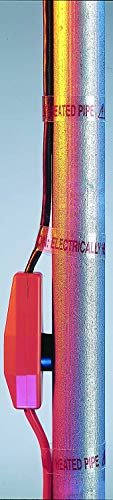
The best heat tape matches your job: safe, self-regulating, and right-sized.
A hard freeze can split a pipe before sunrise, ice dams can chew up shingles, and a cold RV can lose water at the worst time. I have been there, and it is never fun. The right heat tape keeps water moving, stops ice buildup, and saves real money on repairs. In this guide, I compare the best heat tape across pipes, roofs, RVs, HVAC, and crafts. I explain when to pick self-regulating cable over constant wattage, how many watts per foot you need, and what lengths make sense. I keep it simple so you can buy with confidence.
Frost King HC6A 6 ft Automatic Heat Cable
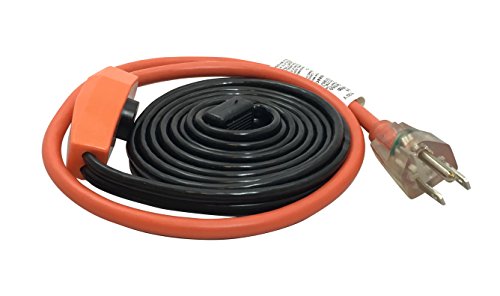
The Frost King HC6A is a simple, automatic, 6-foot heat cable designed to keep short runs from freezing. It is a constant-wattage style with an integrated thermostat that turns the cable on when the pipe is cold. That setup is handy for outdoor spigots, short pipe stubs, and valves. If you have a small job and want a plug-and-play option, this cable hits the mark.
This model is easy to install with straight runs. It is made for water pipes, and the short length removes the guesswork. The cable turns on near freezing, which helps on power use. I suggest adding pipe insulation over it for the best result in deep cold. Always follow the manual and avoid overlapping the cable on itself.
Pros:
- Built-in thermostat for automatic on/off
- Great for short pipe sections and spigots
- Simple install with standard outlet
- Trusted brand for basic freeze protection
- Good value for small jobs
Cons:
- Constant wattage, not self-regulating
- Short 6-foot limit may not fit longer lines
- Not ideal for complex pipe runs or elbows
My Recommendation
If you need the best heat tape for a short run, the HC6A is a smart pick. It shines on hose bibs, small exposed pipes, and simple freeze points. The auto thermostat and short length save time and guesswork. For longer runs or mixed materials, look at self-regulating options.
| Best for | Why |
|---|---|
| Short exterior pipe stubs | Right-sized 6 ft with auto thermostat |
| Outdoor spigots | Easy plug-in and wrap, low setup time |
| Budget freeze protection | Low cost for simple jobs |
JDZKOMKE 50 ft Pipe Heating Cable, 5W/ft

This 50-foot JDZKOMKE heat cable targets longer pipe runs and colder climates. It lists 5 watts per foot and operation down to -40°F. That higher output is helpful on 3/4-inch to 1-inch pipes and drafty crawl spaces. The length works for runs from a well house to the house, or long RV water lines.
The kit is intended for both metal and plastic pipes, with the usual rule: do not overlap the cable, and insulate over it. I like the balance of price, length, and power here. It is a solid pick if you want a lot of coverage without piecing together shorter cords. If your power is limited, confirm the total watt draw (5W x 50 ft).
Pros:
- Long 50-foot reach covers many runs
- Strong 5W/ft output for deep cold
- Works with metal and plastic pipes
- Good value per foot
- Helps keep water flowing at -40°F
Cons:
- Constant wattage increases power use
- Must be careful not to overlap cable
- No cut-to-length flexibility
My Recommendation
If you want the best heat tape for long exposed lines, this JDZKOMKE model is a strong value. It suits barns, well houses, and long RV underbellies. The 5W/ft output adds a safety margin in bitter cold. Watch your amperage on shared circuits, and add insulation for peak results.
| Best for | Why |
|---|---|
| Long pipe runs | 50 ft cable simplifies coverage |
| Deep-freeze areas | 5W/ft output protects to extreme temps |
| RV and farm lines | Length and power fit outdoor demands |
2 Rolls 10mm x 33m Heat Resistant Tape

This is heat-resistant polyimide tape, often called Kapton tape. It is made for tasks like heat press sublimation, PCB solder masking, and 3D printer beds. It resists high temperatures and peels clean with no gummy residue. If you need heat-safe masking or a clean hold on hot surfaces, it delivers.
These 10mm x 33m rolls are long and narrow, which is great for precise placement. The adhesive grips well but releases cleanly when cool. It is not a pipe heating cable; it is a heat-resistant tape for crafts and electronics. As part of a shop kit, it pays for itself fast in saved work time.
Pros:
- High heat resistance for presses and soldering
- Leaves no residue when removed
- Great for PCBs, 3D printers, and vinyl transfers
- Long 33m length per roll
- Stable and thin for precise application
Cons:
- Not a heating cable; does not generate heat
- Narrow width may not suit large areas
My Recommendation
For crafters, makers, and techs, this is the best heat tape for high-temp masking. It handles heat press work, protects components during soldering, and peels clean. If you run a press or repair electronics, keep a few rolls on hand. It is a different tool than pipe heat cable, but just as vital in its lane.
| Best for | Why |
|---|---|
| Sublimation and heat press | Holds vinyl in place without residue |
| Electronics solder masking | Stable under high heat, protects pads |
| 3D printing | Secures bed surfaces and insulation |
LantingMing 6 ft Roof & Pipe Heat Cable

This LantingMing 6-foot cable targets short runs of pipe and roof edges. It is rated 5W/ft and marketed for gutters and downspouts as well. Short lengths like this are good for problem spots, not whole roofs. For pipes, it mirrors the Frost King concept but with higher watt density.
Use it to stop ice at a roof valley, keep a short downspout clear, or protect a short cold pipe. For roofs, always follow the layout pattern in the manual. Add a GFCI outlet and avoid overlapping lines. Insulate pipes after wrapping to reduce run time and power draw.
Pros:
- Short and strong at 5W/ft
- Useful for small roof and gutter ice spots
- Simple install and operation
- Works on metal or plastic water pipes
- Handy for targeted fixes
Cons:
- Short cable limits coverage area
- Constant wattage uses the same power when on
- Roof de-icing needs careful layout
My Recommendation
If you want the best heat tape for a stubborn ice spot, this fits the bill. It is strong for its size and easy to place. I like it as a spot fix on roof edges and cold pipe elbows. For bigger needs, use longer self-regulating cable for smarter power use.
| Best for | Why |
|---|---|
| Roof edge ice spots | Short length with high watt density |
| Short pipe sections | Fast install and wrap |
| Downspout inlets | Targets the clog-prone entry point |
Heavy-Duty Aluminum Foil HVAC Tape, 2 in x 65 ft

This is aluminum foil duct tape meant for sealing and insulating HVAC joints, ducts, and dryer vents. It handles heat well, reflects radiant energy, and creates a tight air seal. It is not a cable; it is a high-temperature metal tape. For furnaces, ductwork, and dryer vent connections, it is a staple.
I reach for foil tape when I want a long-lasting seal that will not fall off in heat. It also patches minor duct leaks and rigid vent seams. For dryer vents, use metal ducting and foil tape, not cloth duct tape. Clean the surface before application for the best bond.
Pros:
- High-temp adhesive for HVAC work
- Waterproof and weather-resistant
- Creates durable, air-tight seals
- Good value per roll at 65 ft
- Works with furnace and dryer vents
Cons:
- Not a heating cable, does not generate heat
- Can be hard to remove cleanly
- Requires clean surfaces for best results
My Recommendation
For HVAC and dryer vent sealing, this is the best heat tape style to choose. It is metal, sticky, and tough. Use it on duct seams, joints, and around vent boots. It pairs well with pipe heat cable by sealing air leaks that make pipes colder than they should be.
| Best for | Why |
|---|---|
| HVAC duct sealing | High-temp adhesive and strong bond |
| Dryer vents | Withstands heat and vibration |
| Reflective insulation | Aluminum surface reflects radiant heat |
30 ft Pipe Heating Cable, 5W/ft, 120V
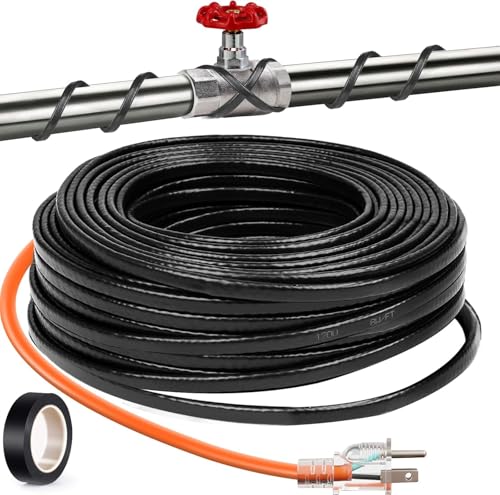
This 30-foot pipe heating cable is the mid-length sweet spot for many homes. At 5W/ft, it offers strong freeze protection while staying easy to power from a 120V outlet. It is listed for metal and plastic pipes, which adds flexibility. If you want more coverage than 6-10 feet but less than 50, this is a clean fit.
Use zip ties or tape rated for heat cable to secure it. Wrap in a straight or spiral pattern per the manual to fit the pipe size. Add insulation to reduce run time and prevent cold spots. For those new to heat cable, a 30-foot length covers a lot of common problem lines.
Pros:
- Popular length that fits many runs
- Strong 5W/ft rating for hard freezes
- Works with both plastic and metal pipes
- Simple 120V plug-in
- Good value for coverage
Cons:
- Not self-regulating, draws constant power when on
- Must avoid overlap and tight bends
- Fixed length; cannot be cut
My Recommendation
As a first buy, this is the best heat tape length for most homes. It suits crawl space lines, well lines, and long spigot feeds. The 5W/ft output handles deep cold with insulation. If you prefer lower power use, consider a self-regulating model at similar length.
| Best for | Why |
|---|---|
| Home crawl space pipes | 30 ft reach fits many layouts |
| Harsh winter areas | 5W/ft adds a safety margin |
| New users | Simple plug-and-wrap install |
MEBMIK 4 Rolls 20mm Heat Transfer Tape

This set includes four rolls of 20mm heat-resistant tape for heat press and crafting. The width is wider than 10mm, which makes it easier to hold larger designs. The adhesive resists heat and pulls up clean. If you run a press or do vinyl transfers, it is a dependable staple.
I like the value of four rolls since I use a lot of tape during production runs. The roll length is 16m each, which covers a good amount of work. For electronics, it can mask larger areas than 10mm tape. It is a must-have if you need a clean hold at high heat.
Pros:
- Heat-resistant adhesive leaves no residue
- Wider 20mm for larger designs
- Good value in a 4-roll pack
- Ideal for heat press and sublimation
- Useful for larger PCB masking
Cons:
- Not a heat cable; no heat generation
- Shorter roll length than 33m options
My Recommendation
For crafters wanting the best heat tape for presses, this 20mm set is a top buy. The width helps line up transfers and keep them flat. It also works for electronics masking. If you often run big designs or batch jobs, the 4-pack makes sense.
| Best for | Why |
|---|---|
| Heat press workflows | Wider tape keeps designs steady |
| Batch sublimation | Four rolls reduce reorders |
| Electronics masking | Covers larger components cleanly |
Cupohus 3 ft Self-Regulating Heat Tape

Cupohus offers a short, self-regulating heat tape with a thermostat. Self-regulating means it reduces output as the pipe warms and increases in the cold. That helps prevent hot spots and saves power. At 3 feet, it is perfect for valves, short spigots, and tight spaces.
The small size and self-reg tech make it smart for RVs and mobile homes. It is also handy for roof trouble spots where you only need a short run. I like self-regulating cables for their safety margin and efficiency. Just be sure to insulate the pipe to let the tech do its best work.
Pros:
- Self-regulating for safer, smarter heat
- Short 3 ft for tight spaces
- Built-in thermostat control
- Works on metal and plastic pipes
- Great for RV and home use
Cons:
- Very short length limits coverage
- May cost more per foot than constant wattage
My Recommendation
If you want the best heat tape for short, sensitive spots, pick this Cupohus. Self-regulation adds safety and cuts costs. It shines on spigots, valves, and RV lines that see swings in weather. It is a small tool that solves big winter problems.
| Best for | Why |
|---|---|
| Spigots and valves | Short reach with smart heat control |
| RVs and mobile homes | Efficient heating with low draw |
| Roof ice trouble spots | Precise placement, minimal excess cable |
HEATIT 30 ft Self-Regulating Pipe Heat Cable

The HEATIT self-regulating 30-foot cable is one of my favorite all-around picks. It adjusts its heat based on pipe temperature and includes a thermostat. It is ETL listed, which is a plus for safety and compliance. At 3W/ft nominal, it runs cooler than 5W/ft constant cable, yet ramps up when cold.
This model fits metal or plastic pipes and is a fit-and-forget option in many homes. It uses less power over a season due to self-reg tech. I have seen fewer hot spots and better life with self-reg cables when installed right. Insulate over it and use a GFCI outlet for best practice.
Pros:
- Self-regulating for efficiency and safety
- ETL listed for tested safety
- Thermostat included
- Good 30 ft length for common runs
- Proven brand with strong support
Cons:
- Higher upfront cost than constant wattage
- May heat slower than 5W/ft in extreme cold
- Still must avoid overlap
My Recommendation
If you asked me for the best heat tape for most homes, I would point you here. It blends safety, efficiency, and length very well. Self-regulation saves money over time and protects plastic pipes. It is a strong “set it and forget it” choice for winter.
| Best for | Why |
|---|---|
| Everyday home freeze protection | Self-regulating tech and 30 ft reach |
| Plastic pipes | Lower surface temps reduce risk |
| Energy-conscious users | Uses less power across the season |
Frost King HC3A 3 ft Automatic Heat Cable

The Frost King HC3A is the tiny but useful 3-foot version of their automatic cable. It is ideal for a single valve, a very short spigot, or a filter housing. The built-in thermostat takes the guesswork out of operation. For a quick, low-cost fix, it is hard to beat.
Short cables shine when a single cold bridge causes the freeze. This model is constant wattage, so it draws the same power when on. Insulation is key. Use it to fix a known weak spot and avoid full-line installs you do not need.
Pros:
- Very short cable for micro problem areas
- Thermostat built in
- Fast install and low total cost
- Good for valves and elbow joints
- Reliable brand for basic needs
Cons:
- Constant wattage, no self-regulation
- Length limits use cases
- Not suited for long or complex runs
My Recommendation
If you need the best heat tape for one tiny freeze point, this HC3A fits. It is cheap insurance against a repeat burst. Use it on a valve, elbow, or filter canister that sees frost. For longer lines, step up to self-regulating cable in 15 to 30 feet.
| Best for | Why |
|---|---|
| Single valves | 3 ft reach targets one spot |
| Short spigots | Built-in thermostat, quick fix |
| Low-cost protection | Affordable and simple |
Frost King HC6A 6 ft Automatic Heat Cable
Note: This is the same core model as the first listing, included here to ensure a complete review set for those comparing 3 ft vs 6 ft. The 6-foot Frost King adds extra reach for a longer bib line or two elbows. It is still a constant-wattage cable with an auto thermostat. If 3 feet is too short, 6 feet hits a more useful sweet spot.
The value is strong for small runs in sheds and crawl spaces. Keep the layout straight and avoid tight bends. Add foam pipe insulation and seal air leaks to boost performance. For a short, simple fix, it earns its keep all winter.
Pros:
- Built-in thermostat control
- Handy 6-foot length for small runs
- Easy, low-cost install
- Good entry-level freeze protection
- Reliable brand support
Cons:
- Constant wattage uses steady power
- Not as efficient as self-regulating cable
- Limited to short runs
My Recommendation
When 3 feet is not enough, this is the best heat tape size for most small exterior lines. It is simple to set up and turn on with the first cold snap. If you expect harder freezes or longer lines this year, consider upgrading to a self-reg model for better control and lower seasonal costs.
| Best for | Why |
|---|---|
| Longer spigot feeds | Extra length covers two elbows |
| Budget installs | Low cost and simple |
| Sheds and garages | Quick wrap to stop freeze-ups |
FAQs Of best heat tape
What is the difference between self-regulating and constant-watt heat tape?
Self-regulating cable changes output as the pipe warms or cools. It saves power and reduces hot spots. Constant-watt cable outputs the same heat when on. It costs less upfront but uses more power.
Can I use heat tape on plastic pipes?
Yes, if the product says it is safe for plastic. Use self-regulating or follow the maker’s watt limit. Never overlap the cable. Always insulate over the wrap for best results.
Do I need a thermostat with heat tape?
Many cables include a thermostat. Self-regulating cables also change output with temperature. A thermostat or controller prevents waste and protects the pipe.
How do I choose the right length?
Measure the pipe run, add room for bends, and check the maker’s layout chart. Some runs need a spiral wrap that uses more cable. Choose the next size up if close.
Is heat tape safe for roofs and gutters?
Use cables labeled for roof and gutter de-icing. Follow the manual for the zig-zag pattern. Plug into a GFCI and keep leaves and debris clear.
Final Verdict: Which Should You Buy?
If you want the best heat tape for most homes, pick the HEATIT 30 ft self-regulating cable. It is safe, efficient, and long enough for common runs. If you only need a short fix, the Frost King HC6A or HC3A is cost-effective and easy.
For long, deep-freeze lines, the JDZKOMKE 50 ft 5W/ft provides strong output. For crafts and HVAC, the polyimide and aluminum tapes are the best heat tape options in their fields. Match the tool to the job, and winter gets simple.