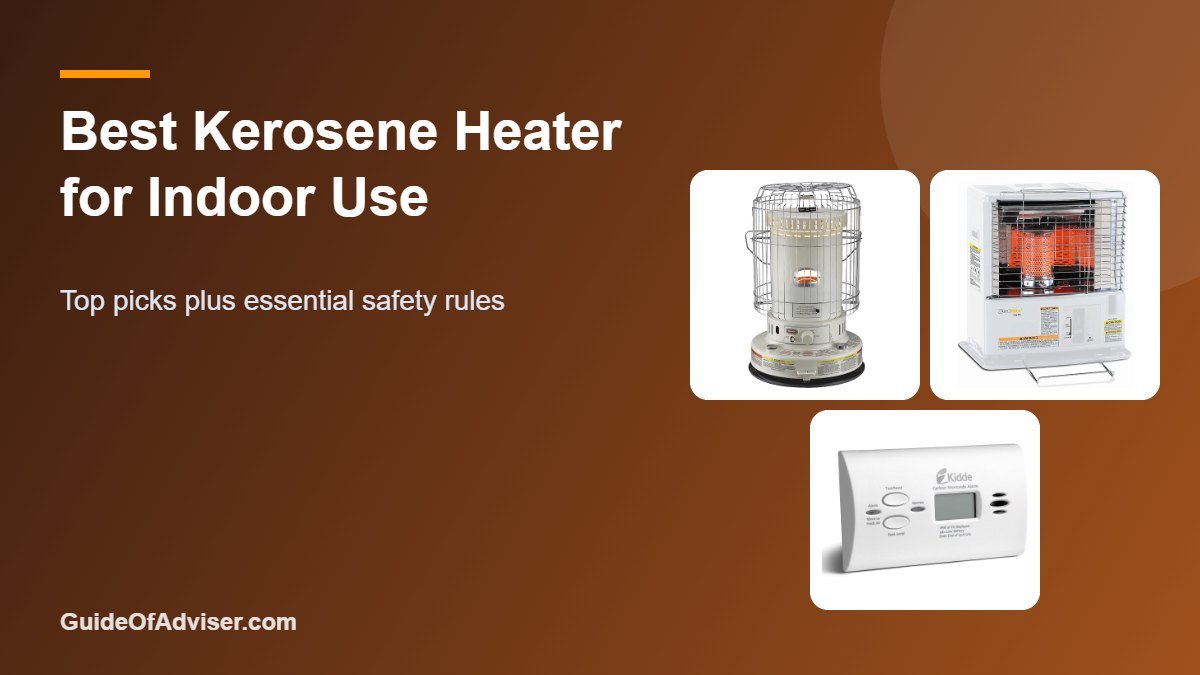
When the power goes out in winter, or you need extra heat in a cold garage or cabin, a kerosene heater can keep you warm without electricity. They produce a lot of heat for their size and run for many hours on one tank. But using a kerosene heater indoors takes care: the wrong heater, wrong fuel or poor ventilation can be dangerous.
This guide explains how to choose the best kerosene heater for indoor use, how to use one safely, and which models are selling best on Amazon right now (all checked for “bought in past month” sales in November 2026).
Quick answer: The Dyna-Glo Indoor Kerosene Convection Heater (23,800 BTU) is the best kerosene heater for indoor use in larger spaces and the top seller on Amazon. For a single room, the Sengoku HeatMate 10,000 BTU is a better size. Always use 1-K grade kerosene, keep a window cracked for fresh air, and run a battery carbon monoxide alarm nearby. Check local laws, since some cities and states restrict indoor kerosene heaters.
Our Top 3 Picks for a kerosene heater for indoor use
Black Friday Deals Live
Dyna-Glo Indoor Kerosene Convection Heater (23,800 BTU)
23,800 BTU convection
- ✓ Large spaces
- ✓ No electricity
- ✓ Top seller

Sengoku HeatMate Portable Kerosene Heater (10,000 BTU)
10,000 BTU portable
- ✓ Room-sized
- ✓ Portable
- ✓ Trusted brand

Kidde Carbon Monoxide Detector (AA Battery)
Battery CO alarm
- ✓ Works in outages
- ✓ Loud alarm
- ✓ 10,000+ sold/month
Safety first: Kerosene heaters burn fuel and produce carbon monoxide and other gases. Never use them while sleeping in a closed room, never use them in tightly sealed spaces, and always have a working CO alarm. Some states and cities ban or restrict indoor kerosene heater use, so check local rules.
Convection vs Radiant Kerosene Heaters
| Convection (round) | Radiant (front-facing) | |
|---|---|---|
| Heat pattern | 360°, warms the whole room air | Directional, warms what is in front |
| Typical BTU | 20,000–24,000 | 8,000–12,000 |
| Best for | Large rooms, basements, garages | Single rooms, small spaces |
| Placement | Center of room, away from walls | Facing the area to heat |
How Many BTUs Do You Need?
| Space | Approx. heater size |
|---|---|
| Small room (up to ~400 sq ft) | 8,000–10,000 BTU |
| Medium room or small apartment (400–700 sq ft) | 10,000–12,000 BTU |
| Large open area or garage (700–1,000 sq ft) | 20,000–24,000 BTU |
Insulation, ceiling height and outdoor temperature change these numbers. Do not oversize; too much heat in a small room wastes fuel and can make the air stuffy.
Quick Comparison
| Heater | BTU | Type | Best for | |
|---|---|---|---|---|
| Dyna-Glo Indoor Kerosene Convection Heater (23,800 BTU) | 23,800 | Convection | Large spaces | Check price |
| Sengoku HeatMate Portable Kerosene Heater (10,000 BTU) | 10,000 | Radiant | One room | Check price |
| Comfort Glow Indoor Kerosene Convection Heater (23,800 BTU) | 23,800 | Convection | Large spaces | Check price |
| 10,000 BTU Kerosene Heater & Stove | 10,000 | Heater/stove | Outages | Check price |
| Kero World 10,000 BTU Kerosene Wick Heater | 10,000 | Radiant | Classic choice | Check price |
| Dyna-Glo RMC-95C6B Indoor Kerosene Convection Heater | High | Convection | Alternative | Check price |
1. Dyna-Glo Indoor Kerosene Convection Heater (23,800 BTU) — Best overall indoor kerosene heater
Stock update (November 29, 2026): This Dyna-Glo model is showing as currently unavailable on Amazon. If it is still out of stock, the Comfort Glow 23,800 BTU convection heater is a near-identical option for large spaces, or see the Dyna-Glo RMC-95C6B below.
Dyna-Glo’s 23,800 BTU convection heater is the best-selling indoor kerosene heater on Amazon right now. A round convection heater sends warmth in all directions, so it suits larger rooms, open living areas, basements and garages during outages or cold snaps.
It runs without electricity, which makes it a popular backup heat source during winter power outages. Like any kerosene heater, use it with proper ventilation and a carbon monoxide alarm.
More than 800 bought in the past month on Amazon with a 4.5-star rating (November 2026).
Pros
- High heat output for large spaces
- No electricity needed
- 360° convection warmth
- Top seller with strong ratings
Cons
- Too powerful for small bedrooms
- Needs careful ventilation
2. Sengoku HeatMate Portable Kerosene Heater (10,000 BTU) — Best for medium rooms
At 10,000 BTU, the Sengoku HeatMate is better sized for a single room. It is a radiant-style heater that warms people and objects in front of it, and it is a favorite for small homes, cabins and outage backup.
More than 500 bought in the past month on Amazon with a 4.4-star rating (November 2026).
Pros
- Right size for one room
- Portable
- Long-running brand
Cons
- Directional heat
- Smaller tank means more refills
3. Comfort Glow Indoor Kerosene Convection Heater (23,800 BTU) — Best alternative for large spaces

Another 23,800 BTU convection model for big areas. It is a solid choice if you want a second option to compare with Dyna-Glo on price and availability.
More than 100 bought in the past month on Amazon with a 4.3-star rating (November 2026).
Pros
- High BTU
- Convection design
- Wick-based, no power needed
Cons
- Pricier
- Large footprint
4. 10,000 BTU Kerosene Heater & Stove — Best for heat and emergency cooking

This compact 10,000 BTU unit can also be used to warm water or food on top, which is handy during long outages. Use it only in ventilated spaces and follow the maker’s guidance for cooking.
More than 100 bought in the past month on Amazon with a 4.2-star rating (November 2026).
Pros
- Heat plus warming surface
- Lower price
- Compact
Cons
- Lesser-known brand
- Not for large rooms
5. Kero World 10,000 BTU Kerosene Wick Heater — Best classic radiant heater

Kero World’s 10,000 BTU wick heater has a glass burner window and is a traditional choice for room heating and outage backup.
More than 50 bought in the past month on Amazon with a 4.3-star rating (November 2026).
Pros
- Classic design
- Room-sized output
- No electricity needed
Cons
- Fewer recent sales
- Directional heat
6. Dyna-Glo RMC-95C6B Indoor Kerosene Convection Heater — Best Dyna-Glo alternative model

A different Dyna-Glo convection model, useful if the main model is out of stock. It offers convection heat for large spaces.
More than 50 bought in the past month on Amazon with a 4.0-star rating (November 2026).
Pros
- Convection heat
- Trusted brand
Cons
- Lower rating than the top pick
How to Use a Kerosene Heater Safely Indoors
- Use only 1-K grade kerosene. Never use gasoline, diesel or camp fuel; they can cause fires or explosions.
- Refuel outdoors with the heater turned off and cool.
- Ventilate: open a window about an inch or keep a door to another room open.
- Install a battery CO alarm in the room and near sleeping areas.
- Keep 3 feet of clearance from curtains, furniture, bedding and paper.
- Place on a level, hard surface away from doorways and foot traffic.
- Never leave it running unattended or while sleeping.
- Keep children and pets away.
How Much Does It Cost to Run?
Running cost depends on local kerosene prices and how high you set the heater. A 23,000 BTU convection heater on high burns roughly a gallon of kerosene every 8–10 hours, while a 10,000 BTU radiant heater uses noticeably less. Compare that with your other heat sources, and remember that kerosene heaters are usually best for backup or supplemental heat rather than all-winter primary heating.
Maintenance Tips
- Burn off old fuel at the end of the season; kerosene can go stale.
- Replace or clean the wick when flames become uneven or smoky.
- Store kerosene in a blue fuel container, away from living spaces.
- Check the auto-shutoff tip-over switch before each season.
Kerosene vs Other Indoor Heaters
| Heater | Needs power? | Indoor safety | Best for |
|---|---|---|---|
| Kerosene | No | Needs ventilation and CO alarm | Outages, garages, cabins |
| Propane (indoor-safe) | No | Needs ventilation and CO alarm | Outages, small spaces |
| Electric space heater | Yes | Safest indoors | Everyday room heating |
| Wood stove | No | Requires chimney | Permanent off-grid heat |
FAQs
Is it safe to use a kerosene heater indoors?
It can be, with the right heater, 1-K kerosene, ventilation and a working CO alarm. Some areas ban indoor use, so check local laws first.
How long does a kerosene heater run on one tank?
Many run 8–14 hours or more per tank, depending on size and heat setting.
Do kerosene heaters smell?
A small smell is normal at start-up and shutdown. Strong odors usually mean bad fuel, a dirty wick or poor burning.
Can I use a kerosene heater during a power outage?
Yes. They are popular outage heaters because they need no electricity. Keep the room ventilated.
What size kerosene heater do I need?
About 10,000 BTU for a single room and 20,000–24,000 BTU for large open spaces.
Can I sleep with a kerosene heater on?
No. Turn it off before sleeping.
Final Thoughts
The best kerosene heater for indoor use is one sized for your space and used safely. The Dyna-Glo 23,800 BTU is the top pick for large areas, the Sengoku HeatMate 10,000 BTU fits single rooms, and a battery CO alarm is essential with any fuel-burning heater.
As an Amazon Associate, GuideOfAdviser earns from qualifying purchases. Prices and “bought in past month” figures were checked on Amazon in November 2026 and can change.