Dicing vegetables quickly and evenly comes down to two things: a sharp knife with the right shape, and good technique. For most home cooks, the best knife for dicing vegetables is a nakiri, a Japanese vegetable knife with a flat edge that meets the cutting board all the way along. A santoku is a close second and a little more versatile.
We compared the best-selling vegetable knives on Amazon by last-month sales and reviews, from budget nakiris to a premium Shun. We also explain how nakiri, santoku and chef knives differ, show a quick onion-dicing method, and cover sharpening, which many top guides skip.
Quick answer: Best overall: HOSHANHO 7-inch Nakiri (2K+ bought last month). Best value: PAUDIN 7-inch Nakiri (Amazon’s Choice, 1K+ bought). Best all-purpose alternative: imarku Santoku (Amazon’s Choice, 1K+ bought). Best premium: Shun Premier Nakiri. Choose a nakiri for push-cutting vegetables, a santoku if you also cut meat and fish.
Our Top 3 Picks for best knife for dicing vegetables
🔥 Black Friday Deals Live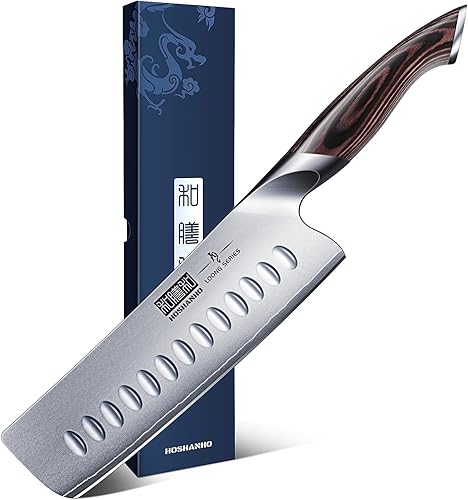
HOSHANHO 7-Inch Nakiri Knife
Flat edge, 2K+ bought last month.
- ✓ Flat edge for full contact
- ✓ Tall blade for scooping
- ✓ Strong sales

PAUDIN 7-Inch Nakiri Knife
Amazon’s Choice, 4,900+ reviews.
- ✓ Great price
- ✓ Sharp out of the box
- ✓ Popular gift

imarku Santoku Knife
Santoku for veg, meat and fish.
- ✓ Versatile
- ✓ Comfortable for most hands
- ✓ Good value
As an Amazon Associate, we earn from qualifying purchases. Prices and deals change often, so check Amazon for the latest price.
How we picked these products
- Checked Amazon US in November 2026 and kept only products with strong “bought in past month” sales.
- Compared ratings and review counts, and dropped listings with too little feedback.
- Matched every product to the exact need in this guide, not just the category.
- Read the top-ranking guides for this topic and added the details they miss or get wrong.
We do not hands-on test every product. Our picks are based on specs, sales, verified buyer feedback and manufacturer information. Last updated: November 2026.
Vegetable Knives Compared
| Product | Best for | Blade | Price |
|---|---|---|---|
| HOSHANHO 7-Inch Nakiri Knife | Best overall | 7 in nakiri, flat edge | Check price |
| PAUDIN 7-Inch Nakiri Knife | Best value | 7 in nakiri | Check price |
| imarku Santoku Knife | Best all-purpose alternative | Santoku | Check price |
| Shun Premier 5.5-Inch Nakiri Knife | Best premium | 5.5 in nakiri | Check price |
1. HOSHANHO 7-Inch Nakiri Knife — Best overall
The HOSHANHO nakiri has a tall, flat blade that makes clean push cuts through onions, carrots and cabbage, and its height helps you scoop diced vegetables off the board.
It has 2,100+ reviews, a 4.7-star rating and 2K+ purchases last month.
Pros
- Flat edge for full contact
- Tall blade for scooping
- Strong sales
Cons
- Not for bones or frozen food
- Needs hand washing
2. PAUDIN 7-Inch Nakiri Knife — Best value
PAUDIN is one of Amazon’s most popular budget knife brands. This nakiri is sharp out of the box and very affordable, which makes it a great first vegetable knife.
It has 4,900+ reviews, a 4.6-star rating and 1K+ purchases last month, and it is an Amazon’s Choice pick.
Pros
- Great price
- Sharp out of the box
- Popular gift
Cons
- Edge needs regular honing
- Heavier than Japanese premium knives
3. imarku Santoku Knife — Best all-purpose alternative
A santoku has a slightly curved tip and handles vegetables, boneless meat and fish. If you want one knife for most prep, choose this over a nakiri.
It has 5,200+ reviews, a 4.6-star rating and 1K+ purchases last month, and it is an Amazon’s Choice pick.
Pros
- Versatile
- Comfortable for most hands
- Good value
Cons
- Less flat than a nakiri
- Not for heavy chopping
4. Shun Premier 5.5-Inch Nakiri Knife — Best premium
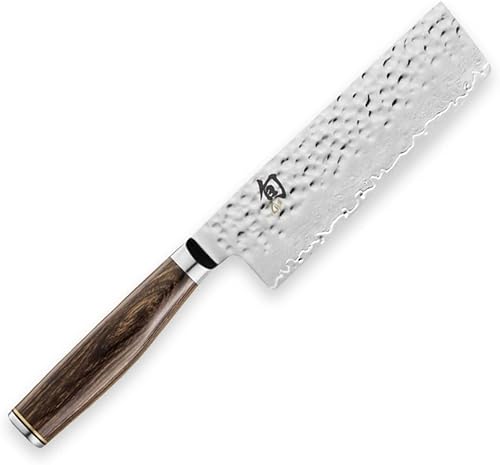
Shun is a premium Japanese brand known for very sharp, thin blades and beautiful finishes. The Premier nakiri glides through vegetables with little effort.
It has 760+ reviews, a 4.8-star rating and 100+ purchases last month.
Pros
- Exceptionally sharp
- Premium build
- Light and precise
Cons
- Expensive
- Thin edge can chip if misused
How to Choose a Knife for Dicing Vegetables
Pick the right blade shape, keep it sharp, and use a stable cutting board.
Nakiri vs santoku vs chef knife
A nakiri has a flat edge for straight up-and-down push cuts, ideal for vegetables. A santoku has a slight curve for push cuts and some rocking. A Western chef knife has a curved belly for rocking cuts and is the most versatile for all foods.
Blade length
For dicing at home, 5.5 to 7 inches is comfortable. Longer blades handle big cabbages and squash; shorter ones feel nimbler for small cuts.
How to dice an onion
Cut the onion in half through the root, peel it, and lay it flat. Make vertical cuts toward the root without cutting through it, add one or two horizontal cuts if you like, then slice across to release even dice.
Keep it sharp
A sharp knife is safer than a dull one because it needs less force. Hone regularly and sharpen with a whetstone or a quality sharpener when the blade starts crushing tomatoes instead of slicing them.
Use the right cutting board
Wood or plastic boards protect the edge. Avoid glass, stone and ceramic boards, which dull knives quickly.
Care
Hand wash and dry right away. Dishwashers can dull and damage blades and handles.
Knife Shape Comparison
| Knife | Edge shape | Best for | Cutting style |
|---|---|---|---|
| Nakiri | Flat | Vegetables | Push / chop |
| Santoku | Slight curve | Vegetables, boneless meat, fish | Push, light rocking |
| Chef knife | Curved belly | All-purpose | Rocking |
| Paring knife | Short, pointed | Peeling, small work | In hand |
Common Dicing Cuts
| Cut | Size | Use |
|---|---|---|
| Large dice | About 3/4 in | Stews, roasted vegetables |
| Medium dice | About 1/2 in | Soups, sautes |
| Small dice | About 1/4 in | Salsas, sauces |
| Brunoise | About 1/8 in | Garnishes, fine sauces |
Knife Safety Tips
- Curl your fingertips under (the “claw grip”) and guide the blade with your knuckles.
- Put a damp towel under the board so it does not slide.
- Never try to catch a falling knife.
- Store knives in a block, magnetic strip or blade guard.
Frequently Asked Questions
What knife is best for dicing vegetables?
A nakiri is best for vegetables; a santoku is a versatile alternative.
Is a nakiri better than a chef knife?
For push-cutting vegetables, often yes; a chef knife is more versatile for meat and rocking cuts.
Can a nakiri cut meat?
It can slice boneless meat, but it is not designed for bones or heavy chopping.
How often should I sharpen my knife?
Hone often and sharpen when the edge stops slicing cleanly, often every few months for home cooks.
What is the best budget vegetable knife?
The PAUDIN 7-inch Nakiri is a popular budget choice.
Are Japanese knives worth it?
They are often thinner and sharper, which makes vegetable prep easier, but they need gentler care.
Final Verdict
The HOSHANHO 7-inch Nakiri is the best knife for dicing vegetables for most home cooks. Choose the PAUDIN nakiri to save money, the imarku santoku if you want one knife for everything, and the Shun Premier if you want a premium Japanese blade.
As an Amazon Associate, Guide Of Adviser earns from qualifying purchases. Product details and prices can change, so please check Amazon before you buy.