The best OpenWRT packages boost speed, security, and control with simple installs.
If you have ever struggled with buffering, lag, or flaky VPNs on your home network, you are not alone. I have been there. I wanted faster speeds, safer browsing, and more control without buying an expensive enterprise device. That is where the best openwrt packages shine. They turn a basic router into a flexible, reliable hub. You can block ads, shape traffic, set up multi‑WAN, or run a private VPN in minutes. In this guide, I will show you the best openwrt packages I rely on, plus two OpenWRT‑ready boards that make these packages sing.
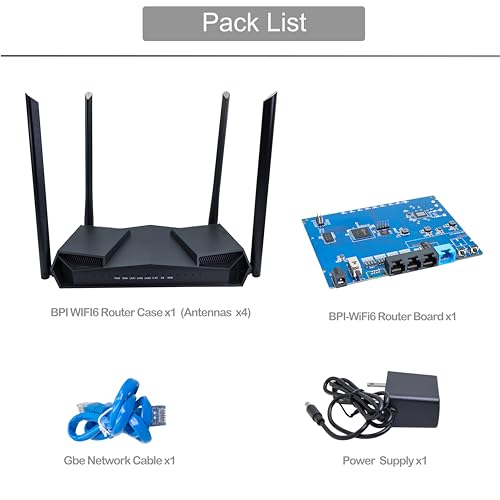
Banana Pi WiFi 6 OpenWRT Router (Black Bundle)

This WiFi 6 OpenWRT board focuses on speed and range. It supports 802.11ax and has solid Gigabit performance. The board is a great base for SQM, WireGuard, and Adblock. The bundle case keeps it neat and easy to place on a shelf.
Setup is simple if you have used OpenWRT before. I installed the best openwrt packages like luci-app-sqm and luci-app-wireguard in minutes. WiFi stability is strong for busy homes. It is a smart buy if you want fast wireless and deep control.
Pros:
- WiFi 6 support improves speed and coverage for many devices
- Great base for SQM to reduce bufferbloat and improve gaming
- Works well with WireGuard and OpenVPN packages
- Case bundle keeps install tidy and protected
- Good for ad blocking and DNS privacy with Adblock and DoH/DoT
Cons:
- WiFi 6 features vary by driver and build
- Needs a bit of tuning for top performance
- Not as plug‑and‑play as a typical consumer router
My Recommendation
If you want fast WiFi with smart traffic control, this board hits the mark. I suggest it to streamers, remote workers, and casual gamers. It shines when paired with the best openwrt packages like SQM, WireGuard, Adblock, and https‑dns‑proxy. You get speed, privacy, and simple control in one box.
| Best for | Why |
|---|---|
| WiFi‑heavy homes | WiFi 6 helps with many clients and busy networks |
| Work‑from‑home | WireGuard, Adblock, and DoH improve privacy and uptime |
| Gaming and streaming | SQM and CAKE cut latency and smooth video |
Banana Pi BPI-R64 OpenWRT Gigabit Router Bundle

The BPI‑R64 is a flexible OpenWRT router board with five Gigabit ports. It runs stable builds and supports dual‑band WiFi via its module. I like it for lab setups and small offices. It is a solid platform for multi‑WAN and VPN services.
The hardware pairs well with the best openwrt packages. You can run mwan3 for failover, WireGuard for remote access, and Adblock for clean browsing. It also handles Samba for quick file shares. It is a smart choice if you want wired speed and solid routing.
Pros:
- Five Gigabit ports for flexible LAN and WAN layouts
- Good base for multi‑WAN with mwan3
- Stable performance with WireGuard and OpenVPN
- Easy to manage with LuCI and luci‑app tools
- Great for Samba and local NAS tasks
Cons:
- WiFi module and drivers may need careful matching
- Large case or mounting may be needed for neat installs
- Not the fastest at heavy crypto loads
My Recommendation
Pick the BPI‑R64 if you prefer wired stability and WAN control. It suits offices, homelabs, and power users. The best openwrt packages like mwan3, luci‑app‑sqm, and WireGuard make it shine. You get strong routing, simple control, and room to grow.
| Best for | Why |
|---|---|
| Small offices | Five Gigabit ports and simple VLAN control |
| Homelabs | Runs mwan3, WireGuard, and Samba with low fuss |
| DIY builders | Open design with strong package support |
The best OpenWRT packages I install first
I use OpenWRT because it is stable and fast. I can add features when I need them. The best openwrt packages turn a simple router into a custom tool. Here are the packages I suggest in 2026, with simple reasons.
Speed and stability
- sqm‑scripts + luci‑app‑sqm: These set up CAKE to cut latency. Games feel smooth and calls stay clear.
- ethtool and irq tuning tools: On some boards, tuning can help. I use them only if I see CPU bottlenecks.
- firewall4 + nft: This is standard in new OpenWRT. It is fast and simple to manage with LuCI.
- Software flow offload: It lowers CPU use on NAT. Use it when it stays stable on your build.
CAKE is my top pick for most homes. It keeps upload and download in check. Your video and games will feel better. That is why I rank SQM among the best openwrt packages.
Privacy and security
- WireGuard + luci‑app‑wireguard: The best mix of speed and simple setup for VPN.
- OpenVPN: Good when a provider or office needs it.
- Tailscale: Easy mesh VPN for zero‑config remote access.
- Adblock or simple‑adblock + lists: Cuts ads and trackers at the DNS level.
- https‑dns‑proxy or dnscrypt‑proxy: DNS over HTTPS or DNS over TLS for privacy.
- Unbound: A validating DNS resolver for better privacy and speed.
- banIP: Blocks bad IPs and reduces attack noise.
- uhttpd with HTTPS: Secure the web interface with TLS.
I love WireGuard on OpenWRT. It is very fast on modern chips. With LuCI support, setup is smooth. It is one of the best openwrt packages for remote work.
Multi‑WAN, failover, and travel
- mwan3 + luci‑app‑mwan3: Load balance or fail over between ISPs.
- travelmate: Share hotel or cafe WiFi to your devices without logging them all in.
- modemmanager or qmi/mbim utils: For LTE/5G dongles as backup links.
mwan3 helps when one ISP fails. It shifts traffic to the backup link fast. The rules are simple, and LuCI makes it clear. I always list mwan3 as one of the best openwrt packages for uptime.
Home server and storage
- samba4 + wsdd2: Share files and make them show up in Windows.
- minidlna: Simple media streaming to TVs and players.
- aria2 or transmission: Light download tools for low power workloads.
- block‑mount + usb‑storage + hd‑idle: Mount disks, manage power, and keep them cool.
Do not push a small router too hard. File shares are fine on mid‑range boards. Use a USB SSD for better speed. These are the best openwrt packages for a light NAS feel.
Smart home and discovery
- avahi‑daemon: Helps Apple and mDNS devices find each other.
- miniupnpd + luci‑app‑upnp: Auto port forwards for consoles and apps. Use with care.
- igmpproxy: For IPTV or multicast needs.
I turn UPnP on only when needed. I set limits and watch logs. It helps games and chat apps. It is useful but should be monitored.
Monitoring and insight
- vnStat + luci‑app‑vnstat: Simple bandwidth history per interface.
- collectd + luci‑app‑statistics: CPU, memory, and network charts.
- nmap and tcpdump: For quick checks and troubleshooting.
vnStat is small and fast. I view usage by day and month. It helps find data hogs. It belongs in the best openwrt packages for any home.
Parental control and content filters
- Adblock with curated lists: Cuts most ads and many trackers.
- dnsmasq‑full + time rules: Set time windows for devices.
- e2guardian or squid (advanced): Heavy filters for strict control. Needs faster hardware.
Start with Adblock and device schedules. Keep it simple and stable. Fine tune as needed. This helps keep peace at home without breakage.
IPv6 and tunnels
- odhcp6c and odhcpd: Core IPv6 clients and server.
- 6in4 or 6rd: Tunnels when a native IPv6 link is not available.
IPv6 is common in 2026. OpenWRT handles it well. I keep IPv6 on for most homes. It works with DNS privacy setups too.
Remote access options
- zerotier: Peer to peer overlay, great for remote device access.
- dropbear with keys: SSH to the router with key auth only.
- ddns‑scripts + providers: Update your hostname when IP changes.
Dynamic DNS is a must for most homes. I use ddns scripts with a free hostname. It just works. It is one of the best openwrt packages for remote control.
How I choose the best OpenWRT packages
I look for speed, safety, and ease. I test on busy networks. I prefer packages with LuCI support. I also check memory use and CPU needs.
Each home has unique needs. I match packages to the goal. Some setups need VPN speed. Others need clean parental control. The best openwrt packages depend on your devices and habits.
Lightweight first
I install small tools before heavy ones. This keeps the system fast and cool. I watch CPU and memory with collectd. If a package slows the router, I look for a lighter option.
Secure by default
I set SSH keys and close unused ports. I use HTTPS for LuCI. I pick DNS privacy tools that fit the hardware. The best openwrt packages help lock the door, not open it.
Test and iterate
I add one feature at a time. I test for a day and check logs. I keep notes on what works well. This makes the network stable and simple.
Sample setups using the best openwrt packages
It helps to have a plan. I built sample setups that anyone can copy. They use the best openwrt packages with clear goals. Start with the one that matches your home.
Work‑from‑home priority
- WireGuard remote access to office or home NAS
- Adblock + https‑dns‑proxy for clean, private DNS
- sqm‑scripts with CAKE tuned to 90% of line rate
- vnStat to monitor monthly data
This setup keeps calls sharp and files safe. It is easy to run on mid‑range hardware. I use this daily. It is built on the best openwrt packages for speed and privacy.
Streamer and gamer smoothness
- sqm‑scripts with CAKE per‑host fairness
- miniupnpd with strict rules for consoles
- Adblock for fewer ads and faster page loads
- collectd charts to spot spikes fast
Latency is king here. CAKE keeps queues short. UPnP helps consoles connect with less fuss. It is a simple but strong plan.
Mobile backup link
- mwan3 with 5G/LTE dongle as backup
- banIP to cut attack noise on WAN
- ddns‑scripts for stable remote access
- luci‑app‑mwan3 for quick status and rules
When the main ISP drops, traffic moves to mobile data. You stay online and calm. This layout saves time and helps during storms. It is one more use for the best openwrt packages.
Router hardware tips for package success
OpenWRT runs on many chips. Some handle crypto better. Some have faster WiFi drivers. Pick hardware that fits your needs and budget.
For heavy VPN use, get a CPU with AES support. For fast WiFi, use WiFi 6 radios with solid drivers. For simple ad blocking and SQM, most mid‑range boards are fine. The best openwrt packages will work well when the base is sound.
Storage and RAM
More flash and RAM gives room for tools. 128 MB flash and 1 GB RAM feels comfy. If you plan to run Docker, pick x86‑64 or strong ARM boards. If not, keep it small and cool.
Power and cooling
Routers run 24/7. Good power and airflow helps them last. Use a clean power supply. Keep vents clear and watch temps on hot days.
Installation tips for the best openwrt packages
Update the package list first. Then install one tool at a time. Restart services after changes. Back up your config when it is working.
LuCI apps make life easy. You can manage SQM, VPNs, and Adblock in a browser. I still check logs at times. It helps spot small issues before they grow.
Tuning SQM
Measure your line with nothing else running. Set SQM limits to about 85–95% of real speed. Test calls and games. Adjust in small steps until latency stays low.
DNS privacy
Pick one method to start. DoH via https‑dns‑proxy is easy. DoT via stubby or dnscrypt works well too. Do not run several at once or you may break lookups.
VPN performance
WireGuard is fast on most routers. OpenVPN runs slower unless the CPU is strong. Test both if you need compatibility. Keep keys safe and rotate them if needed.
Troubleshooting common issues
Adblock breaks a site? Add it to the whitelist. Slow speeds after SQM? Check your limits and CPU. WiFi drops? Try another channel and reduce power a bit.
If LUCI will not load, use SSH to restart uhttpd. If mwan3 loops, check health checks and weights. Read logs in System and Kernel tabs. Most issues are small and simple to fix.
Safety notes for power users
Do not open services to the internet unless needed. Use SSH keys, not passwords, for admin access. Limit UPnP to trusted LANs and devices. Keep backups in case a package change causes a boot loop.
Test big changes at off hours. Label cables and note port roles. Good notes save time later. The best openwrt packages are powerful, so treat them with care.
FAQs Of best openwrt packages
What are the must‑have packages for most homes?
Start with luci‑app‑sqm, Adblock, https‑dns‑proxy, and WireGuard. Add vnStat and collectd for insight. These cover speed, privacy, and monitoring.
Will SQM slow my internet?
It can cap peak speed slightly. But it cuts lag and jitter a lot. For most homes, it feels faster overall.
Is WireGuard better than OpenVPN on OpenWRT?
Yes for speed and simplicity in most cases. Use OpenVPN only if your provider or office needs it.
Do I need a fast router for the best openwrt packages?
Not always. Adblock and DNS tools are light. VPN and Samba need more CPU and RAM.
How do I pick between Adblock and simple‑adblock?
Both work well. Adblock has more features. simple‑adblock uses fewer resources.
Final Verdict: Which Should You Buy?
The Banana Pi WiFi 6 OpenWRT bundle fits busy WiFi homes. It pairs well with the best openwrt packages for speed and privacy.
The BPI‑R64 suits wired setups and multi‑WAN stability. It shines with mwan3, SQM, and WireGuard. Pick the one that matches your network today.