
A handheld wet tile saw lets you cut tile where it sits, make L-shaped notches, trim installed tile or cut large porcelain slabs that will not fit on a small table saw. Water keeps the diamond blade cool and cuts down on silica dust, which is important for your lungs.
Here is the honest picture: handheld wet tile saws are a niche tool, and most models sell in small numbers on Amazon. Many DIYers get better results from a tabletop wet saw for straight cuts and an angle grinder with a tile blade for notches. This guide covers the best handheld options available, plus the alternatives with much stronger recent sales, so you can choose the right tool for your project.
Quick answer: Best handheld cordless: Makita XCC01Z 18V LXT 5-inch Wet/Dry Cutter (tool only). Best corded budget handheld: SEESII 4-3/8-inch Wet Tile Saw. Best value alternative for notches: 4-1/2 inch porcelain diamond blade for angle grinders (3K+ bought last month). Best tabletop option: VEVOR 7-inch Wet Tile Saw (Amazon’s Choice). Best pro tabletop: DEWALT D24000S 10-inch wet saw with stand.
Our Top 3 Picks for best handheld wet tile saw
🔥 Black Friday Deals Live
Makita XCC01Z 18V LXT Brushless Cordless 5" Wet/Dry Masonry Saw (Tool Only)
Makita 18V wet/dry, cordless.
- ✓ Cordless around water
- ✓ Brushless motor
- ✓ Wet or dry cutting

4-1/2" Porcelain Tile Diamond Saw Blade for Angle Grinders
Grinder tile blade, 3K+ bought.
- ✓ Very affordable
- ✓ Great for notches
- ✓ Clean porcelain cuts
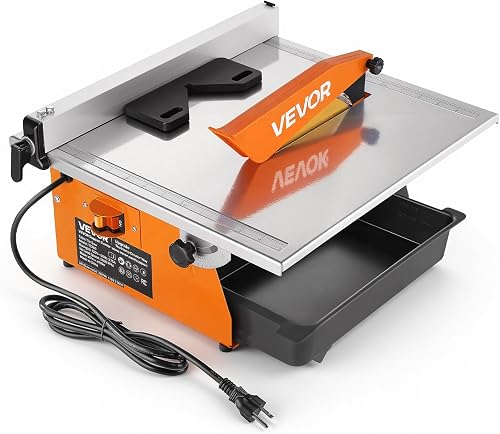
VEVOR 7-Inch Wet Tile Saw
7-inch wet saw, Amazon’s Choice.
- ✓ Accurate straight cuts
- ✓ Beginner friendly
- ✓ Affordable
As an Amazon Associate, we earn from qualifying purchases. Prices and deals change often, so check Amazon for the latest price.
How we picked these products
- Checked Amazon US in November 2026 and kept only products with strong “bought in past month” sales.
- Compared ratings and review counts, and dropped listings with too little feedback.
- Matched every product to the exact need in this guide, not just the category.
- Read the top-ranking guides for this topic and added the details they miss or get wrong.
We do not hands-on test every product. Our picks are based on specs, sales, verified buyer feedback and manufacturer information. Last updated: November 2026.
Handheld Wet Tile Saws and Alternatives Compared
| Product | Best for | Type | Price |
|---|---|---|---|
| Makita XCC01Z 18V LXT Brushless Cordless 5" Wet/Dry Masonry Saw (Tool Only) | Best handheld cordless | Cordless 18V, 5 in | Check price |
| SEESII Handheld Wet Tile Saw, 1350W, 4-3/8-Inch Blade | Best corded budget handheld | Corded 1350W, 4-3/8 in | Check price |
| 4-1/2" Porcelain Tile Diamond Saw Blade for Angle Grinders | Best value alternative | Diamond blade for 4.5 in grinders | Check price |
| VEVOR 7-Inch Wet Tile Saw | Best tabletop value | Tabletop, 7 in | Check price |
| DEWALT 10-Inch Wet Tile Saw with Stand (D24000S) | Best pro tabletop | Sliding table, 10 in | Check price |
1. Makita XCC01Z 18V LXT Brushless Cordless 5" Wet/Dry Masonry Saw (Tool Only) — Best handheld cordless
Makita’s 18V wet/dry cutter is a true handheld tile and masonry saw with a brushless motor and a water feed for wet cutting. Being cordless makes it easier and safer to use around water. Batteries and charger are sold separately.
It has 160+ reviews, a 4.4-star rating and 50+ purchases last month.
Pros
- Cordless around water
- Brushless motor
- Wet or dry cutting
Cons
- Tool only (battery extra)
- Expensive
2. SEESII Handheld Wet Tile Saw, 1350W, 4-3/8-Inch Blade — Best corded budget handheld

SEESII’s corded handheld cutter uses a 4-3/8 inch blade and a 1350W motor rated up to 13,000 RPM for ceramic tile, marble, granite and stone. It is a lower-cost way to make wet cuts on installed tile and pavers. Always plug corded wet saws into a GFCI-protected outlet.
It is a newer listing with a 4.4-star rating and 50+ purchases last month, so check recent reviews before buying.
Pros
- Lower price
- Good for notches
- Water feed
Cons
- Corded near water needs GFCI
- Smaller blade
3. 4-1/2" Porcelain Tile Diamond Saw Blade for Angle Grinders — Best value alternative
If you already own a 4-1/2 inch angle grinder, a quality porcelain tile blade is the cheapest way to make notches, outlet cutouts and trims. Use a dust shroud and respirator, or wet the tile where the tool allows.
It has 500+ reviews, a 4.6-star rating and 3K+ purchases last month.
Pros
- Very affordable
- Great for notches
- Clean porcelain cuts
Cons
- Dusty if cut dry
- Needs a grinder
4. VEVOR 7-Inch Wet Tile Saw — Best tabletop value
For straight cuts in standard floor and wall tile, a small tabletop wet saw is more accurate and easier for beginners than a handheld saw.
It has 100+ reviews, a 4.1-star rating and 100+ purchases last month, and it is an Amazon’s Choice pick.
Pros
- Accurate straight cuts
- Beginner friendly
- Affordable
Cons
- Limited cut length
- Messy water tray
5. DEWALT 10-Inch Wet Tile Saw with Stand (D24000S) — Best pro tabletop

For large-format porcelain and big jobs, DEWALT’s D24000S is a favorite of tile setters, with a sliding table, large blade and stand.
It has 820+ reviews, a 4.7-star rating and 50+ purchases last month.
Pros
- Pro accuracy
- Cuts large tile
- Durable
Cons
- Expensive
- Heavy, not portable
How to Choose a Handheld Wet Tile Saw
Choose by cut type and tile size, and always manage water, dust and electrical safety.
When a handheld wet saw makes sense
Choose handheld for cutting installed tile, curved or L-shaped notches, pavers and very large porcelain panels. For simple straight cuts, a tabletop saw or manual tile cutter is easier.
Electrical safety around water
Use a GFCI-protected outlet or cordless tool, keep cords out of the water stream, and never use a damaged cord.
Silica dust protection
Cutting tile and stone creates silica dust, which is harmful to breathe. Wet cutting reduces dust a lot; still wear eye protection and, for dry cuts, a respirator rated for silica.
Choose the right blade
Use continuous-rim diamond blades for porcelain and ceramic tile to reduce chipping. Segmented blades cut faster but leave rougher edges.
Cutting technique
Mark cuts with tape, support the tile fully, start slowly to score the glaze, then let the blade do the work without forcing it.
Which Tile Cutting Tool Do You Need?
| Job | Best tool | Pick above |
|---|---|---|
| Straight cuts in standard tile | Tabletop wet saw or manual cutter | VEVOR 7-inch |
| Notches and outlet cutouts | Grinder + porcelain blade | 4-1/2″ diamond blade |
| Cutting installed tile / pavers | Handheld wet saw | Makita XCC01Z |
| Large-format porcelain | Pro tabletop or track saw | DEWALT D24000S |
Safety Gear Checklist
- Safety glasses or goggles
- Hearing protection
- Respirator rated for silica dust (especially for dry cuts)
- Gloves with good grip
- GFCI outlet or cordless tool
Related guides
Frequently Asked Questions
Are handheld wet tile saws worth it?
For notches, installed tile and large slabs, yes; for most straight cuts, a tabletop saw is easier.
Can I use an angle grinder to cut tile?
Yes, with a porcelain tile diamond blade and proper dust protection.
Do I need GFCI for a wet saw?
Yes, always plug corded wet saws into a GFCI-protected outlet.
What blade is best for porcelain?
A continuous-rim diamond blade made for porcelain.
Is cutting tile dangerous?
It can be; protect eyes, hands and lungs, and follow tool instructions.
Is the Makita XCC01Z sold with a battery?
No, the XCC01Z is tool only.
Final Verdict
The Makita XCC01Z is the best handheld wet tile saw for most serious DIYers who need true handheld wet cutting. If you only need notches, a porcelain diamond blade for your angle grinder is the best value, and a tabletop wet saw like the VEVOR 7-inch is easier for straight cuts.
As an Amazon Associate, Guide Of Adviser earns from qualifying purchases. Product details and prices can change, so please check Amazon before you buy.