
The best PCIe x1 graphics card nails stable multi-display output with low power.
You have a compact PC or a server board with only x1 lanes free. You need extra displays, basic GPU acceleration, or a quiet upgrade that just works. The hunt for the best PCIe x1 graphics card can feel confusing, since many options are older or use different slot sizes. I’ve tested and researched what still works well today, which adapters help, and where x1 models shine. This guide breaks it down in simple terms, so you can add ports, boost video decode, and keep power low—without replacing your whole system.
SOYO GeForce GT 740 Low Profile (4GB DDR3)

The SOYO GT 740 low-profile card gives a quick display upgrade for small cases. It runs cool, stays quiet, and fits systems that need VGA, DVI, or HDMI 2.0. While this is a PCIe x16 card, many users run cards like this in an open-ended x1 slot or with an x1-to-x16 adapter. That makes it a handy pick if you want more outputs on a tight budget.
Performance is entry level but fine for 1080p displays and basic media work. The 4GB DDR3 helps with large desktops and browser tabs. Drivers remain easy to find and install. For older rigs, it can be the perfect drop-in to extend system life.
Pros:
- Low-profile bracket works in small form factor PCs
- HDMI 2.0 for 4K at 60 Hz on many monitors
- Quiet single-fan cooling
- 4GB VRAM helps with light multitasking
- Easy driver support on modern Windows
Cons:
- PCIe x16 form factor needs an adapter for true x1 slots
- DDR3 is slower than GDDR5
- Not for modern gaming or heavy 3D apps
My Recommendation
If you need a simple, quiet way to add HDMI 2.0 and legacy outputs, this is a good pick. Pair it with an x1-to-x16 riser if your board only has x1 lanes. It is not the fastest, but it is stable, cool, and easy to set up. For many office and HTPC builds, it behaves like the best pcie x1 graphics card once you add a low-cost adapter.
| Best for | Why |
|---|---|
| SFF office PCs | Low-profile; quiet cooling; simple outputs |
| Budget 4K video | HDMI 2.0 support for 4K at 60 Hz |
| Legacy displays | VGA and DVI for old monitors |
ASUS GeForce GT 730 2GB GDDR5, 4x HDMI

This ASUS GT 730 is all about displays. You get four HDMI ports in a single-slot, passive design. That means no fan noise and tight case fit. While the card uses PCIe 2.0, you can often use it with an x1 riser if your slot is limited.
The GDDR5 memory is faster than DDR3, so menus feel snappy and video decode is smoother. It does not target games, yet it shines for multi-monitor dashboards, trading, and content playback. The passive heatsink keeps it simple and reliable. For four-screen setups, it punches above its weight.
Pros:
- Four HDMI outputs on one single-slot card
- Fanless design; zero noise
- GDDR5 improves responsiveness over DDR3
- Great for multi-monitor productivity
- Good driver support and easy setup
Cons:
- Not a native PCIe x1 card; needs adapter for x1 slots
- Limited 3D performance
- Heatsink needs airflow in hot cases
My Recommendation
If you run a four-monitor workstation, this is a star. Use an x1-to-x16 adapter if your board lacks x16 or x8. It delivers quiet, stable output all day, which is what many pros need. For many multi-display rigs, it can be the best pcie x1 graphics card in practice thanks to its four HDMI ports and passive cooling.
| Best for | Why |
|---|---|
| Four-screen workstations | 4x HDMI on a single-slot card |
| Silent PCs | Passive cooling, no fan noise |
| Data dashboards | Reliable 2D and video decode |
TKOWTB ST425 PCIe x1 AST2400 VGA Card

The TKOWTB ST425 is a true PCIe x1 graphics card with an AST2400 chip. It targets server and industrial boards that only need stable VGA output. It supports up to 1920×1200 at 60 Hz, which is perfect for console access and BIOS work. If you need a simple display from an x1 slot, it is a clean solution.
Setup is quick. Drivers are light, and compatibility is broad. I like it for maintenance carts, rack servers, and lab machines. It will not power modern games, but it gives you reliable video when nothing else fits.
Pros:
- Native PCIe x1 interface
- Stable VGA output up to 1920×1200
- Great for servers and headless systems
- Low power and low heat
- Simple, hassle-free install
Cons:
- VGA only; no HDMI or DP
- Not meant for media or 3D
- Limited resolution options
My Recommendation
Choose this if you need a true x1 card for barebones video. It is ideal for BIOS access, remote management, or recovery work. For those specific jobs, it acts like the best pcie x1 graphics card because it installs fast and just works. If you need modern ports, pair it with a converter or consider another pick.
| Best for | Why |
|---|---|
| Server consoles | Native x1 slot support; simple VGA |
| Repair benches | Plug-and-play video at 1080p |
| Legacy systems | Wide OS and board compatibility |
Quadro NVS 285 128MB PCIe x1 by Compeve

NVIDIA’s Quadro NVS 285 is an older pro card, but the x1 interface is the draw. It can power dual displays via adapters and is built for long uptime. For legacy software stacks, it often brings driver stability that consumer cards lack. If your system is dated, this can be a drop-in fix.
Memory is small at 128MB, so keep tasks light. Menus, spreadsheets, and terminal windows are no problem. If you need modern codecs, look elsewhere. For classic office use, it does what it says on the tin.
Pros:
- True PCIe x1 compatibility
- Professional-grade reliability
- Works with older drivers and OS builds
- Good for dual display with adapters
- Low heat and power draw
Cons:
- Very limited VRAM and features
- Not for modern media or gaming
- May require DMS-59 adapter cables
My Recommendation
For legacy workstations, this is a practical pick. It is not flashy, but it keeps older apps happy. If your top need is stable 2D display from an x1 slot, it feels like the best pcie x1 graphics card for that niche. Make sure you have the right adapters for your monitors.
| Best for | Why |
|---|---|
| Legacy offices | Stable drivers for old software |
| Dual monitors | DMS-59 to dual-output support |
| Low-power rigs | Minimal heat and power |
PNY NVIDIA NVS 300 512MB PCIe Gen2 x1
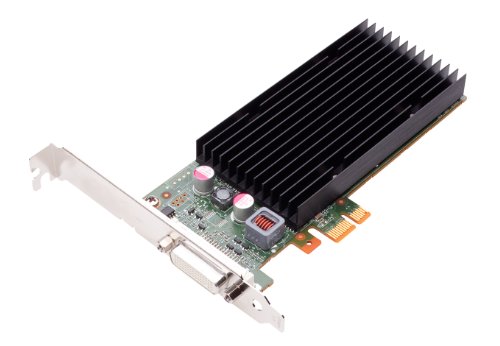
The PNY NVS 300 is a well-known business card with a PCIe x1 interface. It connects via DMS-59 to dual DVI or VGA. For office and POS systems, it offers steady output and long-term driver support. It fits systems with only x1 lanes, which is the key here.
It is not a media engine, but it handles 2D work well. The 512MB of VRAM is enough for basic tasks and dual 1080p screens. It is quiet and cool. Many IT shops still keep a few on hand for quick swaps.
Pros:
- Native PCIe x1 compatibility
- Dual output via DMS-59
- Business-grade reliability
- Low power and low heat
- Easy driver installs
Cons:
- Needs DMS-59 breakout cable
- Limited media acceleration
- Not made for 3D workloads
My Recommendation
Pick this for dual displays on a strict x1 system. It’s a proven option for kiosks, offices, and lab setups. For those needs, it stands among the best pcie x1 graphics card choices thanks to its simplicity and uptime. Keep a DMS-59 cable handy to connect your screens.
| Best for | Why |
|---|---|
| Point-of-sale | Reliable dual-display support |
| IT deployments | Easy drivers; fast swaps |
| Older PCs | PCIe x1 slot friendly |
SOYO GeForce GT 730 Low Profile 4GB DDR3

This SOYO GT 730 targets office and HTPC roles with dual HDMI outputs. It uses PCIe x16 1.1, so plan for an x1 adapter if needed. The low-profile build makes it easy to fit in tight cases. It’s a basic but helpful way to modernize display outputs on an old box.
Performance is modest but smooth for everyday tasks. Drivers are easy to locate, and the card sips power. If your system only has an x1 slot, this still works with a riser. It adds life to old hardware in a very cost-friendly way.
Pros:
- Two HDMI ports for dual displays
- Low-profile brackets included
- Low power use
- 4GB VRAM for light multitasking
- Good for HTPC and office work
Cons:
- PCIe x16; needs adapter for x1-only boards
- DDR3 memory is slow
- Not ideal for 3D or newer codecs
My Recommendation
Use this when you need two HDMI ports on a small PC. It is easy to set up and quiet in daily use. With an adapter, it can serve as a best pcie x1 graphics card stand-in for many budget rigs. It’s great for browsers, spreadsheets, and video playback.
| Best for | Why |
|---|---|
| HTPC builds | Dual HDMI and low noise |
| Budget office PCs | Affordable dual display |
| Small cases | Low-profile with simple cooling |
QTHREE GeForce GT 730 4GB Low Profile (x8)

This QTHREE GT 730 uses a PCIe 2.0 x8 link and offers HDMI, DP, and VGA. It’s a flexible, low-profile option for small towers. While it is not x1, it often runs via x1 risers for simple multi-monitor setups. The 4GB DDR3 helps with big desktops and light media.
Driver support is wide. The card handles two to three displays for basic work. It is not a gaming card but makes strong sense for offices and HTPCs. It’s cost-effective and easy to install.
Pros:
- Multiple output options (HDMI, DP, VGA)
- Low-profile bracket included
- Stable drivers and low power
- Good for dual or triple monitors
- Budget-friendly price
Cons:
- Not native x1; needs adapter for x1 use
- DDR3 is slower than GDDR5
- Limited hardware decode for modern codecs
My Recommendation
Pick this for a small PC that needs varied ports. With a simple riser, it behaves like the best pcie x1 graphics card for general multi-monitor work. It runs cool, and setup is smooth. If you do basic video and lots of tabs, it fits the job.
| Best for | Why |
|---|---|
| Mixed-display setups | HDMI, DP, and VGA onboard |
| Small form factor | Low-profile design |
| Light media use | Low power, easy drivers |
Glorto GeForce GT 730 4GB Low Profile (x8)

The Glorto GT 730 is another low-profile, low-power pick. It includes two HDMI ports, DisplayPort, and VGA for wide monitor support. It’s built for entry tasks, not high-end 3D. With an x1 adapter, it can slide into limited slots and deliver stable output.
It’s friendly for Windows 11, office apps, and streaming video. The cooling stays quiet. If you want simple multi-monitor output without fuss, it works well. The value is strong for old desktops that need modern ports.
Pros:
- Two HDMI plus DP and VGA
- Low-profile for small builds
- Quiet cooling
- Reliable drivers for modern OS
- Good price-to-function ratio
Cons:
- Not native x1; requires an adapter
- DDR3 limits speed
- Basic media acceleration only
My Recommendation
Use this for a quiet, multi-port upgrade in a tiny PC. With an x1 riser, it behaves like a best pcie x1 graphics card for home and office. It is easy to live with and keeps costs low. If you need 4K60, check the specific port support and monitor limits.
| Best for | Why |
|---|---|
| Quiet HTPCs | Low noise and low power |
| Multi-monitor desks | Multiple ports for simple hookups |
| Older systems | Easy drivers, low demands |
GIGABYTE GeForce GT 710 2GB (GV-N710D3-2GL)
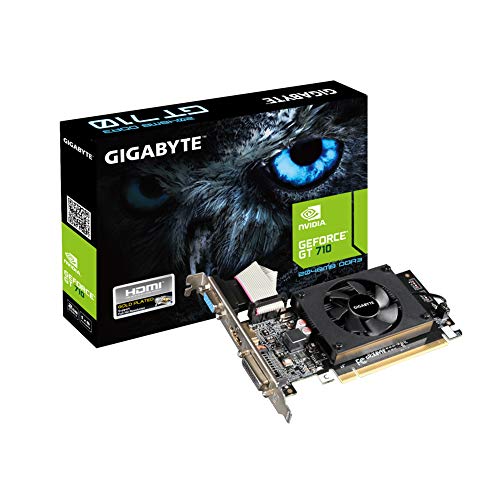
The GIGABYTE GT 710 is a classic low-end card that many people trust. It is compact, quiet, and fine for adding simple display outputs. While it typically uses an x8 electrical link, many boards run it with x1 adapters. It is one of the easiest ways to bring a display to older PCs.
Do not expect modern codec support or gaming power. Instead, count on stable 1080p output and smooth desktop use. It is great for very light systems, thin clients, or kids’ homework PCs. It is also a handy spare for troubleshooting.
Pros:
- Low-profile options and low heat
- Stable for basic 1080p output
- Wide driver support
- Very low power draw
- Affordable and available
Cons:
- Old architecture; limited features
- Not a native x1 card
- Poor for modern video codecs
My Recommendation
If you need a very simple, cheap display, this delivers. With an adapter, it can act like the best pcie x1 graphics card for basic tasks. It saves old computers from the scrap heap. Keep your expectations in check and it will serve well.
| Best for | Why |
|---|---|
| Basic desktops | Low power and easy install |
| Troubleshooting | Reliable spare for testing |
| Kids’ PCs | Stable 1080p for homework |
QTHREE GeForce GT 210 1GB Low Profile

The GT 210 is very basic, yet it still has fans for specific jobs. It adds HDMI and VGA to older systems, with very low heat and noise. It’s a lifesaver for PCs that need any GPU to run a modern OS GUI. While it is a PCIe x16 card, you can often run it with an x1 riser in a pinch.
Keep workloads simple. It can drive a 1080p display and play basic videos. It is not good for heavy web video or modern effects. For the price, it is a light-duty fix.
Pros:
- Ultra-low power and heat
- Low-profile form factor
- Easy to install in old PCs
- HDMI and VGA coverage
- Very affordable
Cons:
- Very weak media and 3D performance
- Not a native x1 solution
- Limited driver support on some setups
My Recommendation
Choose this when you just need a picture on screen. It is fine for logins, BIOS work, and simple tasks. With a riser, it can fill the role of a best pcie x1 graphics card for emergency use. For daily work, prefer newer GT 730 variants if your budget allows.
| Best for | Why |
|---|---|
| Emergency display | Cheap, low-power output |
| Legacy PCs | Simple HDMI/VGA support |
| BIOS access | Works in many old systems |
FAQs Of best pcie x1 graphics card
Can I run a PCIe x16 GPU in an x1 slot?
Often yes, with an x1-to-x16 adapter or an open-ended x1 slot. Bandwidth drops, but basic display use is fine.
What is the main reason to pick a true x1 card?
Compatibility. True x1 cards fit servers, SFF boards, and systems with only x1 lanes free.
Will an x1 card handle 4K video?
It depends on the chip and outputs. Some x1 cards offer 1080p only, while others support higher resolutions.
Are these cards good for gaming?
No. They target 2D, multi-monitor, and light media tasks. Use a modern gaming GPU for 3D.
Do I need special drivers?
Most use standard drivers. For legacy cards, download the correct package for your OS version.
Final Verdict: Which Should You Buy?
If you need a true x1 solution, the PNY NVS 300 and TKOWTB ST425 are safe, simple picks. They fit strict x1 slots and deliver stable output for work.
For multi-monitor on a budget with an adapter, the ASUS GT 730 with 4x HDMI is hard to beat. It often acts like the best pcie x1 graphics card for four-screen desks.