RTX 4060 or RX 7600 XT deliver the best balance for i5‑8400.
If you’re trying to squeeze more life from your Coffee Lake build, you’re not alone. Many gamers still rock an i5‑8400 and want smooth 1080p or even 1440p frames without wasting money. That’s where smart GPU pairing matters. I’ll help you pick the best gpu for i5 8400 based on budget, PSU limits, and case size. I’ll also explain bottlenecks in plain words and share real-world tips, so you enjoy great performance without regrets.
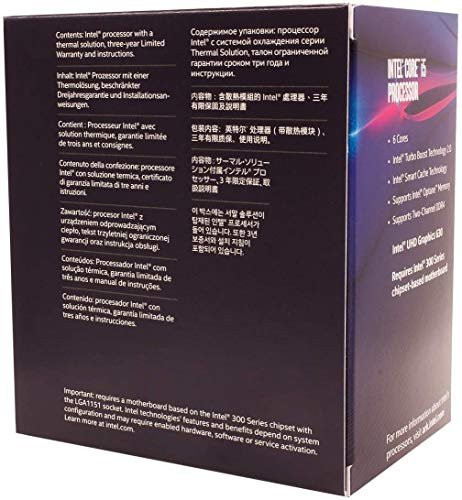
Intel Core i5-8400 (8th Gen) Processor

The Intel Core i5-8400 is a six-core chip that still holds its own for gaming. It has a 2.8 GHz base and boosts up to 4.0 GHz, which is enough for most modern titles at 1080p. It supports DDR4 memory and works with 300-series motherboards, making it a stable base for an affordable gaming rig. If you plan smart, you can match it with a midrange GPU and get smooth play without changing your whole platform.
When I pair this CPU with cards like the RTX 4060 or RX 7600 XT, I see great value at 1080p. For esports, you can push high frame rates with tuned settings. In heavier open-world games, you can aim for stable 60-90 FPS with smart tweaks and good cooling. This chip is old, but with the right GPU, it still delivers fun, low-cost gaming.
Pros:
- Six real cores make it reliable for modern games
- Solid boost up to 4.0 GHz for light-to-mid CPU loads
- Great match for efficient GPUs like RTX 4060 or RX 7600 XT
- Works on mature, stable 300-series boards
- Affordable used market keeps total build cost low
- Good enough for streaming with an NVENC-capable GPU
- Low 65W TDP helps keep noise and temps in check
Cons:
- No hyper-threading, so heavy CPU tasks can choke
- May bottleneck very fast GPUs at 1080p high FPS
- Older chipset limits some newer platform features
My Recommendation
If you already own an i5-8400, it still makes sense to upgrade your GPU. The best gpu for i5 8400 depends on your resolution and case. For 1080p, an RTX 4060 or RX 7600 XT is the sweet spot. For 1440p with high settings, the RTX 4060 Ti or RX 6700 XT can work if you cap frames and lean on GPU-bound settings. This balance keeps costs down while giving you a big boost.
For users who are budget-conscious and want a simple upgrade path, this CPU shines when paired with modern, efficient cards. Keep RAM at 16GB or more and a speedy SSD. If you stream or record, choose a GPU with a strong encoder like the latest NVENC. That way, you extend the life of your system with less hassle and more fun per dollar.
| Best for | Why |
|---|---|
| 1080p high settings | Pairs well with RTX 4060 or RX 7600 XT for smooth FPS |
| Casual streaming | Modern GPU encoders lighten the CPU load |
| Budget upgrades | Low TCO with used CPU and new midrange GPU |
Intel Core i5-8400 6-Core, up to 4.0 GHz (Renewed)

This renewed i5-8400 gives you the same six-core punch with a friendlier price. It’s a good pick if you’re rebuilding or reviving an older LGA 1151 system. Paired with a recent GPU, it can run the latest games at 1080p smoothly. If you manage your expectations and optimize settings, you’ll be surprised how capable it still is.
Buying renewed hardware is about value and trust. Look for sellers with strong standards, clean packaging, and warranty support. Combine that with a reliable B360 or Z370 board, and drop in a modern card like an RX 7600 XT. With that combo, you get balanced power without draining your wallet.
Pros:
- Renewed price makes it easy to build on a budget
- Solid 6-core performance for midrange gaming loads
- Works well with efficient, current-gen GPUs
- Great for secondary rigs or living room PCs
- Supports 16GB–32GB RAM for smoother multitasking
- Low power draw suits modest air cooling
Cons:
- Renewed stock quality can vary, so vet the seller
- Not ideal for heavy productivity that needs 8+ cores
- CPU-only upgrades won’t fix poor GPU performance
My Recommendation
If you’re buying renewed to save money for the GPU, smart move. The best gpu for i5 8400 on a value-first plan is the RX 7600 or RX 7600 XT. They’re efficient, cool, and strong at 1080p. If you prefer Nvidia for DLSS 3 and AV1 NVENC, the RTX 4060 is a great fit. Whichever you pick, match it to your monitor’s refresh and your PSU’s capacity.
Use this CPU in a balanced build where the GPU does the heavy lifting. Keep background tasks light while gaming, and you’ll get steady frames. I also suggest a 1TB NVMe SSD if your board supports it for faster loads. That way, your renewed CPU feels surprisingly fresh with the right graphics card.
| Best for | Why |
|---|---|
| Value-focused 1080p builds | Renewed price lets you invest more in the GPU |
| Nvidia feature fans | Pairs well with RTX 4060 for DLSS 3 and NVENC |
| Quiet gaming PCs | Low CPU power keeps fans slow and noise low |
Dell OptiPlex 3060 SFF, i5-8400, 16GB/512GB (Renewed)

The Dell OptiPlex 3060 SFF is a compact office PC that can be turned into a stealth gaming rig. It packs an i5-8400, 16GB RAM, and a fast 512GB SSD, which is a strong base. Its small form factor means limited space and a modest PSU, so you must pick the right GPU. Low-profile, low-power cards make all the difference here.
If you want a plug-and-play upgrade, look at half-height cards like the GTX 1650 LP (no external power) or Radeon RX 6400 LP. For a bigger leap, the RTX A2000 or similar workstation-style low-profile GPUs can be a game-changer if your specific model has the right slot and airflow. Always check the power supply rating and whether the case supports a dual-slot low-profile card. A little planning avoids heat and stability issues.
Pros:
- Small footprint fits tight spaces and media setups
- Comes with 16GB RAM and a 512GB SSD out of the box
- Great idle power and low noise for everyday use
- Works with low-profile GPUs for casual to mid gaming
- Ideal for esports titles and light AAA with tuned settings
- Affordable way to get a whole PC and then add a GPU
Cons:
- Limited PSU headroom can restrict GPU choices
- Half-height card requirement narrows options
- Airflow can be tight; thermal throttling risk if ignored
My Recommendation
In an SFF Dell like this, the best gpu for i5 8400 is usually a low-profile card. For no-fuss upgrades that sip power, a GTX 1650 LP or RX 6400 LP is perfect for 1080p esports and lighter AAA. If you want more muscle and your specific SFF case allows it, an RTX A2000-class card offers strong performance with modest power draw.
Watch power plugs and slot clearances before you buy. Also use a fresh thermal paste and keep the dust filters clean. That keeps the system cool and quiet. In the right setup, this small PC can deliver big fun without a huge footprint or budget.
| Best for | Why |
|---|---|
| Esports and indie games | RX 6400 LP or GTX 1650 LP fit and run cool |
| Quiet living room PCs | Low-power GPUs keep noise and heat low |
| Small offices and dorms | SFF size saves space while staying capable |
Acer Nitro 50, i5-8400, RX 580, 8GB/1TB

The Acer Nitro 50 bundles the i5-8400 with a classic RX 580. That GPU still plays many games at 1080p medium-to-high, though newer titles can push it hard. The case is compact and stylish, and it’s fine for a starter build. If you want a bigger performance jump, the good news is that modern GPUs deliver a lot more FPS per watt.
Before upgrading, check your specific PSU rating and power connectors inside the Nitro 50. Some prebuilt models use 300–350W units with limited PCIe plugs. If that’s the case, cards like the RX 6600, RTX 3050, or RTX 4060 are excellent picks thanks to their efficiency. With a safe power budget and updated drivers, you can expect a big uplift without replacing the whole PC.
Pros:
- Ready-to-run gaming tower with a clean look
- RX 580 handles many 1080p titles at sensible settings
- Easy upgrade path to newer, efficient GPUs
- Good airflow for a compact OEM case
- Solid CPU base for casual to midrange gaming
- Great for learning PC upgrades without a full build
Cons:
- OEM PSU may limit high-end GPU upgrades
- RX 580 is aging and uses more power than newer cards
- Storage is HDD-based; add an SSD for faster loads
My Recommendation
Inside this tower, the best gpu for i5 8400 is the one that matches your PSU. If you have no extra PCIe power leads, go RX 6600 or RTX 3050. If you do have the connectors and enough wattage, the RTX 4060 is a superb upgrade for 1080p and entry 1440p. It adds DLSS 3 and AV1 encoding, which helps with streaming and video work.
Update your BIOS, install a quality SSD, and give the system a dust clean before the GPU swap. This simple prep helps stability. You’ll feel the difference the moment you load into your favorite game. With the right card, this machine wakes up and stays relevant for a few more years.
| Best for | Why |
|---|---|
| 1080p AAA gaming | RTX 4060 or RX 6600 keep frames high and power low |
| Streaming gameplay | Modern encoders reduce stutter and improve quality |
| Quiet upgrades | New GPUs run cooler and quieter than RX 580 |
How to choose the best gpu for i5 8400
The i5-8400 is capable, but it’s not a new high-end CPU. That means your GPU choice should be smart, not extreme. Aim for balance so the card does most of the work at your chosen resolution. That is how you get the best value and a smoother experience.
At 1080p, the GPU can outpace the CPU in very high FPS games. You might hit CPU limits in busy scenes or main cities. To avoid that, pick a card that runs cool and efficient and lean on GPU-bound settings like resolution scale, shadows, and post-processing. This shifts workload off the CPU and steadies your frames.
If you game at 1440p, you can step up the GPU a bit. The higher resolution pushes more work to the graphics card. This means less chance of a CPU bottleneck, even with the i5-8400. You still should cap frames to your monitor refresh for smoothness.
VRAM matters in new titles. 8GB is a safe floor for 1080p and even 1440p in many games today. Some heavy textures will want more, but smarter settings can help. I favor cards with at least 8GB of memory for this CPU pairing.
Power and thermals matter in older cases. Check your PSU wattage and connectors. Many older builds use 400–500W power supplies. That’s okay for efficient cards like the RTX 4060 or RX 7600 XT. Keep cables tidy, clean dust filters, and ensure good front-to-back airflow.
Software features are a big part of value. Nvidia’s DLSS 2/3, Reflex, and AV1 NVENC are strong if you stream or record. AMD offers FSR 2/3 and modern encoders too. Pick the platform whose ecosystem fits your games and your workflow best.
If you play competitive shooters, latency matters more than ultra graphics. Favor a card that delivers high, stable FPS with low stutter. The best gpu for i5 8400 in esports is one that is efficient and runs cool, like the RTX 4060 or RX 7600. You’ll get quick frames without jet-engine fans.
If you play big single-player games, shader-heavy scenes can get choppy. Frame generation features help on GPUs that support them, but make sure your game supports it and that your CPU can keep up. I like to target 90–120 FPS in esports and a steady 60–90 FPS in AAA games with this CPU.
Used vs new is a tough call. The used market can be tempting, but older cards can be power-hungry or mined-on. Newer midrange cards use far less power and have better encoders. The best gpu for i5 8400 is often a new, efficient model—not an old flagship.
Finally, think about your monitor. No need to chase 240Hz if your screen tops out at 75Hz. Match your GPU to your resolution and refresh. This simple step saves money and avoids a mismatch you can’t see.
Expected performance with the best gpu for i5 8400
Here’s what you can expect with well-matched cards and sensible settings. Your exact results vary by game and cooling, but these targets are realistic and repeatable.
- RTX 4060 at 1080p high: Modern AAA often 70–110 FPS; esports 180–300 FPS with tuned settings.
- RX 7600 XT at 1080p high: Similar to RTX 4060 in raw raster; esports 160–280 FPS tuned.
- RTX 4060 Ti at 1440p high: 60–90 FPS in many AAA; CPU limits lower at 1440p than 1080p.
- RX 6700 XT at 1440p high: 60–100 FPS in many titles; strong 12GB VRAM for textures.
- RX 6600 at 1080p high: 60–90 FPS in modern games; super efficient for small PSUs.
- Low-profile options (RX 6400 LP, GTX 1650 LP): 60–144 FPS in esports at 1080p medium/high.
To reduce CPU bottlenecks, I cap FPS to my monitor’s max refresh and use variable refresh (G-Sync or FreeSync). I also raise GPU-heavy settings and reduce CPU-heavy ones like draw distance and crowd density. It’s a simple trick that pairs well with the best gpu for i5 8400.
Power, size, and compatibility tips
Before buying, check three things: PSU wattage, PCIe power connectors, and GPU clearance. Older builds often have 400–500W PSUs with one 8-pin or none. Many modern midrange GPUs need only 1x 8-pin or no connector at all. Measure from the back of the case to any drive cage before you order.
Small form factor cases need low-profile or short cards. If you have a prebuilt, the motherboard may be proprietary. Make sure the PCIe x16 slot is standard size and that the BIOS is up to date. Update your chipset and GPU drivers after installing the card.
Cooling matters more than you think. Replace old case fans with quiet 120mm or 140mm units. Add intake at the front and exhaust at the back. The i5-8400 runs cooler with a fresh thermal paste application. This small work pays off in stability and lower noise.
Streaming and creator notes with the best gpu for i5 8400
If you plan to stream, proper GPU choice matters. Nvidia’s latest NVENC and AV1 support are excellent for clean video at lower bitrates. AMD’s newer encoders have improved a lot as well. The CPU will thank you for offloading the job to the GPU encoder.
I have streamed on an i5-8400 with a modern GPU without issues. Set your encoder to NVENC or the AMD equivalent, and use CBR with an appropriate bitrate for your platform. Keep a browser and background apps light during broadcast. This keeps frames steady and your viewers happy.
Upgrades beyond the GPU
RAM and storage upgrades make a big difference. Move to 16GB or 32GB of DDR4 if you’re still on 8GB. Install a 1TB or larger SSD for faster loads and updates. Keep your OS and drivers current. These steps help the best gpu for i5 8400 shine without hiccups.
Consider your peripherals too. A 1080p 144Hz monitor is a sweet match for this system class. A quality headset and a responsive mouse improve gameplay more than you think. You don’t need to spend a fortune to feel a big upgrade in comfort and control.
Top picks shortlist: best gpu for i5 8400 by use case
- Budget 1080p esports: RX 6400, GTX 1650, or used GTX 1660 Super.
- Best balanced 1080p: RTX 4060 or RX 7600 XT for great frames and features.
- 1440p entry/high: RTX 4060 Ti or RX 6700 XT for more headroom and VRAM.
- SFF builds: GTX 1650 LP, RX 6400 LP, or RTX A2000-class low-profile.
- OEM PSU limited: RX 6600, RTX 3050 (low power, easy drop-in).
Repeat after me: the best gpu for i5 8400 is the one that fits your case, power, and games. Get that right, and you’ll love the results.
FAQs Of best gpu for i5 8400
Will the i5-8400 bottleneck an RTX 4060?
Sometimes at 1080p with very high FPS targets. Cap frames to your monitor refresh and lean on GPU-heavy settings to reduce CPU limits.
Is the RX 7600 XT a good match for the i5-8400?
Yes. It’s efficient, fast at 1080p, and pairs well with this CPU. It’s a top value choice.
What PSU do I need for an RTX 4060 with i5-8400?
A quality 450–550W PSU is plenty for most builds. Check your exact GPU vendor’s recommendation.
Can I run 1440p with an i5-8400?
Yes. Use a stronger midrange GPU like the RTX 4060 Ti or RX 6700 XT and aim for 60–90 FPS.
What’s the safest low-profile GPU for a Dell SFF i5-8400?
A GTX 1650 LP or RX 6400 LP. They fit, sip power, and handle esports at 1080p.
Final Verdict: Which Should You Buy?
If you want the best gpu for i5 8400 at 1080p, pick the RTX 4060 or RX 7600 XT. They run cool, support modern features, and deliver great frames.
For 1440p or heavy VRAM use, step to an RTX 4060 Ti or RX 6700 XT. Match your GPU to your PSU and case, and enjoy an affordable, smooth upgrade.